Author: Evan Rose

The Deficit Myth: Book, Speech (And Other) News

Happy holidays! I hope that those of you who celebrate Thanksgiving had a joyous feast with friends and loved ones. Ordinarily, I would prepare at least a couple of side dishes the day before, but I wasn’t able to do that this year because I spent most of Wednesday in NYC at Danske Bank’s annual New York Summit.

I spoke at the Summit in 2019, and I was invited back to debate/discuss inflation, debt, and deficits with Harvard economist Ken Rogoff. It was a private event, so there is no video. But we had a good discussion, and I had the opportunity to challenge the audience (and Ken) to think differently about why a currency-issuing government (like the U.S., Japan, the U.K., Australia, Canada, etc.) issues securities, whether it has to pay “market rates” on any bonds it chooses to issue, and whether it makes any economic difference whether interest rates are supported via Treasury paying interest on bonds or the Federal Reserve paying interest on reserves. This is all old hat for me, but the arguments were new to much of the audience.

In Other News

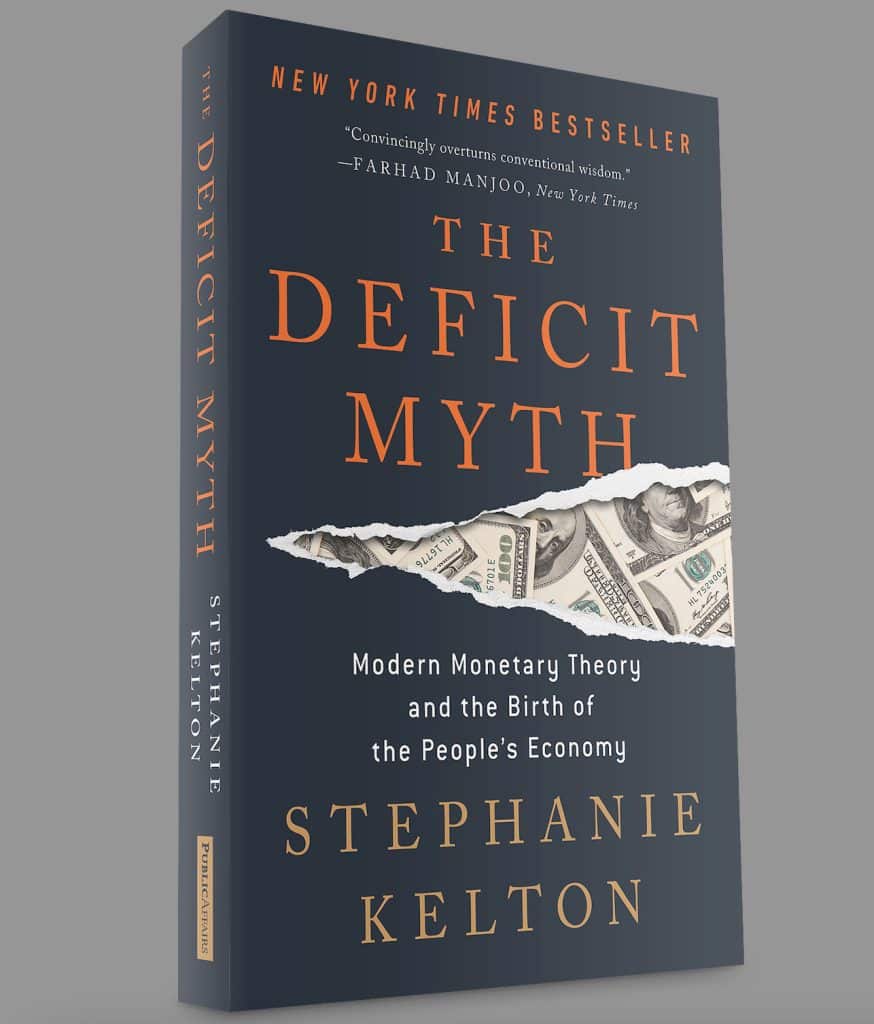
Many of you subscribed to this newsletter after reading my first book, The Deficit Myth: Modern Monetary Theory and the Birth of the People’s Economy. Writing that book was a labor of love, and I am humbled that it continues to serve as a beacon of hope and inspiration for so many people. If you haven’t read it, Amazon has chosen to promote the Kindle edition at a special price ($3.99) for the entire month of December.
And now for the big news.

The proposal for my next book went to prospective publishers last month, and the response was nothing short of incredible. I spent the last two weeks meeting with some of the most impressive teams in America, and the book was auctioned yesterday. I am still digesting everything, but I can tell you that I am excited to be “pregnant” with another book (something a friend and well-known author once told me was a prerequisite to grinding out a book).

As the fall semester winds to a close, I am about to go full-throttle. More on the book—title and publisher— coming soon! I hope you will continue the journey with me.
The Disappearance Of The American Dream

Today I want to address the disappearance of what was once called the “American dream.” Its disappearance provides an important clue about why Trumpism continues to attract so many.

During the 1950s and 1960s, my father, Ed Reich, owned a shop on the main street from which he sold women’s clothing to the wives of factory workers.

This time of year reminds me of his anxious dependence on holiday sales. Between Thanksgiving and Christmas, he needed to earn enough to pay the bills and have a sufficient sum to carry us through the first part of the following year.

We weren’t rich but never felt poor, and our standard of living rose steadily through the 1950s and 1960s — as factory workers and their spouses did better and better.

This was an era when the income of a single factory worker or schoolteacher or baker or salesman or mechanic was enough to buy a home, have two cars, and raise a family.

FOR THREE DECADES after World War II, America created the largest middle class the world had ever seen. During those years, the earnings of the typical American worker doubled, just as the size of the American economy doubled.

Over the last 40 years, by contrast, the size of the economy has more than doubled again, but the earnings of the typical American have barely budged (adjusted for inflation).

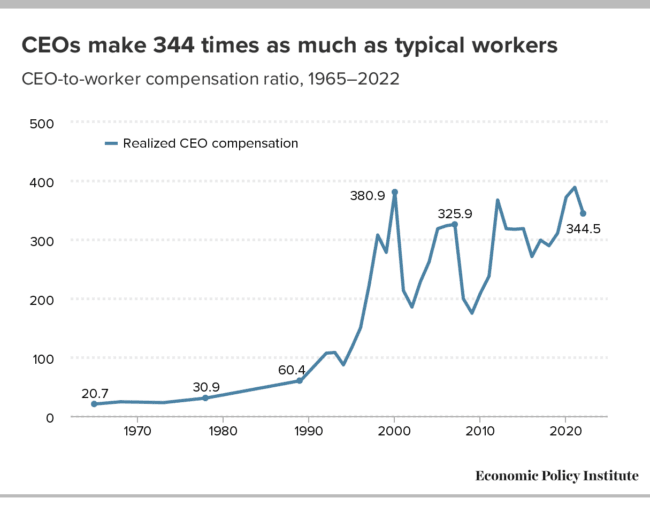
Then, the CEOs of large corporations earned an average of about 20 times the pay of their typical worker. Now, they rake in over 300 times.

In the 1950s and 1960s, the richest 1 percent of Americans took home 9 to 10 percent of total income. Today they take home more than 40 percent.

Then, the economy generated hope. Hard work paid off. The living standards of most people improved through their working lives. Their children enjoyed better lives than they had. Most felt that the rules of the economic game were basically fair.

Although many women, Black people, and Latino people were still blocked from getting a fair share of the economy’s gains, the nation committed itself to changing this. New laws guaranteed equal opportunity, barred discrimination, promoted affirmative action, and expanded educational opportunity for all.

Today, confidence in the economic system has sharply declined. Its apparent arbitrariness and unfairness have undermined the public’s faith in it. Cynicism abounds. Equal opportunity is no longer high on the nation’s agenda.

To the contrary, our economic and political system now seems rigged.

That’s because it is.

THE THREAT TO CAPITALISM is no longer communism or fascism but a steady undermining of the trust modern societies must depend on.

When most people stop believing they and their children have a fair chance to make it, the tacit social contract begins to unravel. And a nation becomes susceptible to demagogues such as Donald Trump.

We have the power to change all this, recreating an economy that works for the many rather than the few. But to determine what must be changed, and to accomplish it, we must first understand what happened and why.

The conventional explanation is that globalization and technological change have made most Americans less competitive. The tasks we used to do can now be done more cheaply by lower-paid workers abroad or by computer-driven machines. Presumably, artificial intelligence will accelerate this trend.

The conventional solution — at least among people who call themselves liberals, Democrats, and progressives — has been an activist government that raises taxes on the wealthy, invests the proceeds in excellent schools and other means people need to get ahead, and redistributes to the needy.

This solution has been vigorously opposed by people who called themselves conservatives and Republicans, who believe the economy will function better for everyone if government is smaller and if taxes and redistributions are curtailed.

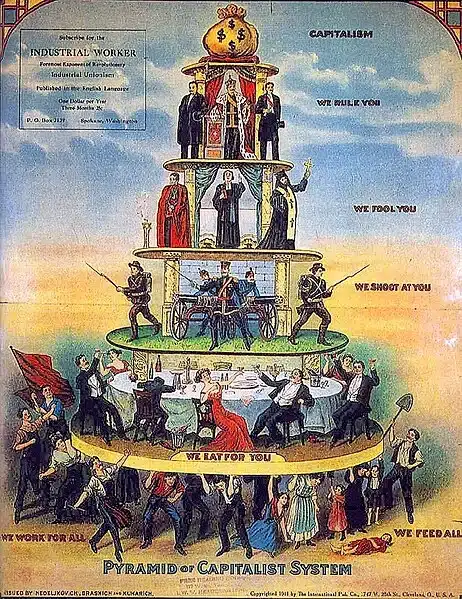
BUT THE CONVENTIONAL EXPLANATION for what has happened overlooks a critically important phenomenon — the increasing concentration of political power in a corporate and financial elite that has been able to alter the rules that run the economy.

And the conventional solution is in some ways beside the point, because it takes insufficient account of the corruption of government by these moneyed interests.

The debate over the merits of the “free market” versus an activist government has diverted attention from how the market has come to be organized differently from the way it was a half-century ago, why its current organization is failing to deliver the widely shared prosperity it delivered then, and what the basic rules of the market should be.

The diversion of attention is not accidental.

Many of the most vocal proponents of the “free market” — including executives of large corporations and their ubiquitous lawyers and lobbyists, denizens of Wall Street and their political lackeys, and numerous multimillionaires and billionaires — have for many years been actively reorganizing the market for their own benefit and would prefer these issues not be examined.

MARKETS DEPEND for their very existence on rules governing property (what can be owned), monopoly (what degree of market power is permissible), contracts (what can be exchanged and under what terms), bankruptcy (what happens when purchasers can’t pay up), labor unions (how much power should workers have), and how all of this is enforced.

Such rules do not exist in nature. They must be decided upon, one way or another, by human beings.

Jayapal Statement On Vote Against Bloated Pentagon Budget

WASHINGTON – U.S. Representative Pramila Jayapal (WA-07) today released the following statement after voting against the National Defense Authorization Act (NDAA):

“I appreciate the work that Ranking Member Adam Smith and Senate Democrats did to ensure that most of the objectionable provisions around reproductive care and diversity, equity and inclusion were removed from the House GOP bill. But I still could not vote for the bill because of the excessive Pentagon budget.

“Every year, Republicans tell us that we have no money for Medicare for All, College for All, childcare, or expanded Social Security that would benefit millions of working families across the country.  And yet we still pump far too much money each year— even more than the Secretary of Defense himself asked for—into an already bloated Pentagon budget.

“The Pentagon has never successfully passed an audit, yet this year we are raising its budget to $886 billion with no increased accountability or transparency. It’s a shameful waste of taxpayer money and I cannot support it.

“I am also very concerned that this year’s NDAA package included a clean reauthorization of FISA, even as the House Judiciary Committee passed a bipartisan reform bill by a margin of 35-2 to overhaul this program that violates Americans’ fourth amendment right to privacy. There was a real solution on the table to stop warrantless spying by government agencies and it should’ve been passed – not a clean extension that does nothing to protect people.

“I will continue to push for transparency and accountability for the Pentagon budget and to ensure that we understand the link between our national security and our ability to take care of our veterans and invest in domestic programs that allow all our families to thrive.”

NDP Calls For Action For Wasagamack And First Nations Impacted By Climate Change

NDP MP Niki Ashton (Churchill—Keewatinook Aski) was joined by the Chief and Council of Wasagamack First Nation and leadership of the Island Lake First Nations to call on the government to work with Wasagamack, one of the largest most isolated communities in Canada to build an airport.


“Wasagamack, a community of over 4000 people has no road, no airport. The ice road season they rely on is shrinking due to catastrophic climate change,” said Ashton. “Leaving First Nations to suffer in enforced isolation is a choice the Liberals are making.”

Ashton also highlighted the human cost of this Liberal choice.

“This is costing peoples lives. As a result of the lack of an airport, people have to rely on inhumane conditions to get to medical care. People rely on boats and helicopters that can’t always fly to get to an airport. When you’re in that situation, those costly minutes and in some cases hours can mean life or death. It’s time for the Feds to act for Wasagamack.”

If Combating Global Warming Is The Goal, The Oil And Gas Industries Have Too Much Power At UN Conference

Allowing the fossil fuel industries to wield their power in the UN’s climate talks means pulling punches against the greatest existential threat faced by humanity, all to spare those companies a threat to their bottom lines.

Frederick Douglass said, “Power concedes nothing without a demand. It never did and it never will.”

Those of us with history in the Civil Rights Movement know that taking on entrenched power and changing the status quo requires dogged tenacity and seizing key moments to break down barriers.

The United Nations Climate Change conference, know as COP28, happening now in Dubai could be one of those key moments for tackling the climate crisis. To ensure we truly create a better world for us all, we must include the participation of every country.

The biggest obstacle is the entrenched power and stubborn influence of the fossil fuel industry, the very cause of the greenhouse gas emissions driving global warming. The industry has had a stranglehold on international climate talks, and this year is showing up to the conference in greater force than perhaps ever before.

Hundreds of oil and gas industry lobbyists usually descend on the climate change conferences. This year, by some unofficial estimates from reporters and watchdog groups, it looks like the number of lobbyists and industry representatives could be more than double what it was at last year’s conference in Egypt.

The purpose of the summit is to assess and improve global efforts to curb global warming. The only way to do that is by drastically reducing emissions, far more than we’re already doing, and that means completely phasing out all fossil fuels.

Two reports released late last month, one by the UN and one by the Rhodium Group consulting firm, reached the same conclusion: The most likely projected temperature increase by the end of this century will be about 3 degrees Celsius, based on current trends. Scientists say that any increase over 2 degrees would be catastrophic. The current trajectory puts us well above the 1.5 C target established by the landmark Paris Agreement from the conference in 2015.

Added to the backdrop of these international negotiations is that this is the hottest year on record, with resulting floods, fires, superstorms and other extreme weather events impacting humanity in increasingly undeniable ways.

With the urgency so crystal clear, there’s no way that the industry driving the climate crisis should be empowered to the degree it is to protect its own profits at the expense of our planet. By allowing oil and gas companies to have so much power and influence, we’re pulling our punches against the greatest existential threat faced by humanity, all to spare those companies a threat to their bottom lines.

An oil baron as host

Of course, plenty of controversy has swirled around the lead-up to this year’s summit. There’s been no shortage of newspaper ink, and website pixels, dedicated to commentary about the host country, the United Arab Emirates, being a nation built on oil. UAE is part of OPEC — which has played a significant role in obstructing progress in past climate negotiations — and has an oil and gas company which is one of the largest in the world, the Abu Dhabi National Oil Company, or ADNOC. The CEO of ADNOC, Sultan Ahmed al-Jaber, is serving as president of this year’s summit.

Having an oil baron at the helm of the world’s most important event focused on curtailing greenhouse gas emissions is an irony that’s been hard to swallow for many. At the organization I lead, Sierra Club, we decided to send a delegation to this year’s conference anyway, in the spirit of hope and determination, as this is a cause too great and too important to be deterred from our efforts — no matter how many foxes are let into the henhouse.

A larger concern of mine has been the voting rules. UN climate talks require all parties involved (in this case, 197 countries plus the European Union) to be unanimous on the adoption of any agreement. On its face, the requirement for consensus agreement is a way to add greater legitimacy to the conference’s outcomes and ensure that Global South countries, and those most drastically impacted by the climate crisis, have an equal say. However, it also means that a single oil- and gas-rich country, or a small group of them, has veto power over any agreement. It’s a structural weakness of these summits that has been exploited for decades by oil- and gas-rich nations (including the United States) to impede progress.

Just think about how much power that gives an industry that spends hundreds of millions of dollars a year in lobbying. Even if every government on the planet was in basic agreement on some new framework or commitment, fossil fuel companies would only need to persuade — or co-opt — the leaders of a single nation to have a game-ending proxy vote.

It’s no surprise that the fossil fuel industry is focused on securing its own future and increasing its wealth. However, that focus is completely at odds with the entire purpose of climate talks like this one, which is supposed to be the health and well-being of humanity, and protecting our fragile planet. To have oil and gas interests influencing global climate talks undermines the whole endeavor.

For now, we maintain hope that the gravity of the crisis drives the 197 participating countries to agree on robust, meaningful action. If that doesn’t happen, we need to turn our focus to overhauling the rules for future climate talks so that fossil fuel companies, or the countries they influence, can’t continue to sabotage the global effort.

Remove One Word From Your Workplace Vocabulary

Chances are good that you’ve used the word “underperformer” at work before.

Stop doing that, bestselling author and leadership expert Simon Sinek said earlier this month at the 2023 World Business Forum summit.

Most people’s definition of an underperformer is far too loose, said Sinek. When asked how to deal with people who are struggling at work, he summed up his advice into three words: give them grace.

“Underperformance is sometimes obviously a condition of the people we hire. Of course, we [might] hire poorly, and sometimes we make mistakes,” he said. ”[But] sometimes, underperformance is a condition of the work environment that they’re in.”

And once someone gains that label, it sticks — whether they deserve it or not.

“We’re all guilty of this,” said Sinek, adding: “What ends up happening is, all we do is think about them and treat them as an underperformer. All we do is notice the things that they get wrong … correcting minor things over and over and over again, to the point where we completely destroy their confidence.”

Here’s his advice for what to do instead.

Practice positive reinforcement

Instead of “creating a narrative” that someone’s underperformance is a “character flaw,” use positive reinforcement to help keep them focused on future improvements, Sinek suggested.

“Positive reinforcement is so much more powerful than catching them doing things wrong,” he said. “It’s also OK to express that you expect a lot of your people. It’s OK to say, ‘We as an organization can do better than we have been doing.’ And I think it’s incumbent on all of us to help each other, and push further, and push harder.”

The concept isn’t new: In a 2013 TED Talk, leadership expert Mike Robbins referenced University of Berkeley data, which found that 23% of employees who feel recognized at work — and 43% of people who feel appreciated — perform better than those who don’t.

If you’re the boss of someone who’s struggling, you might want to offer them coaching while rewarding them for their strengths, rather than dwelling on their weaknesses. Firing them should never be your first thought, Sinek noted.

“The only time, for me, that somebody should be asked to leave the company is if they proved themselves to be uncoachable,” he said. “If there’s no willingness to learn whatsoever.”

The U.N. Announces The Hottest Year

When 2023 began, it seemed likely to be just one more year in the ongoing collapse of the world’s climate system. We were at the tail end of a long La Niña cold period in the Pacific, which meant that, although global temperatures had been near record levels for the past few years, they hadn’t quite topped 2016, the period of the last strong El Niño, which brought the hottest year to date—not to mention considerable havoc from Australia to Alaska.

Amid signs of that Pacific warm current starting to build anew, climatologists looked ahead to nextyear as the time when all hell might break loose. Experts said it was possible that in 2024 we could go past 1.5 degrees Celsius above pre-industrial temperatures—the mark that we had pledged to try to avoid at the Paris climate summit just eight years ago.

Instead, dire things began happening much, much sooner. This spring, the keepers of various data sets pointed out that sea-surface temperatures around the globe were setting records. In July, a buoy off the Florida Keys recorded what some meteorologists believe is the highest marine temperature ever measured, setting in at 101.1 degrees, which is right about where people keep their hot tubs. That extreme heat soon moved onshore; because the northern hemisphere has more land than the southern, this is always the time of year when consolidated global temperatures reach their height. And on July 3rd scientists reported that, if you averaged in all the earth’s weather stations, ships, ocean buoys, and satellites, as an expert explained to the Washington Post, the planet had recorded the hottest day in the history of measurements. Thermometers stretch back only a few centuries, but scientists are good at assembling proxy markers from glacial cores and lake sediments; they said that this may have been one of the hottest days in at least a hundred and twenty-five thousand years, which takes us about back to the point when people began using shells as decorations. July 4th was hotter, and then July 6th broke the record again. As for the year as a whole, data from the World Meteorological Agency show that, as the U.N. Secretary-General, António Guterres, told the global climate talks in Dubai last week, we can safely say, even with weeks to go, that 2023 will take the title.

The northern hemisphere began, as always, to tilt away from the sun as the year wore on, and the absolute average temperatures began to decline from those all-time peaks. But climatologists have another way of keeping track—they measure deviations from the norm for a particular date, comparing, say, September of 2023 with all the other Septembers for which we have records, and with the baseline for Septembers from the period before the Industrial Revolution had begun to warm the world. And in September we, in fact, went past that 1.5-degree mark. This would be an incredibly grim and remarkable milestone, except that in November, on the Friday before Thanksgiving to be exact, we also went past two degrees Celsius above the pre-industrial baseline. Because the Paris accords—again, signed just eight years ago—committed the world to “holding the increase in the global average temperature to well below 2°C above pre-industrial levels,” this was a signal moment. It didn’t mean that we’d utterly failed—the way these things are officially recorded, it will take several years for meteorologists, averaging annual temperatures over a two-decade span, to conclude that we’ve passed 1.5°C for good—but it was stunning. Almost no one had predicted that it could come this quickly; by autumn, we were living in a world far different than any that human civilization had known. And not a pleasant one: in the United States, insured losses from thunderstorms and related hazards were set to top fifty billion dollars for the first time in a single year, and in Canada wildfires had smashed records (and produced triple the amount of carbon dioxide that all the heating and cooking and flying and driving and cooling that Canadians will do this year).

The damage from climate disasters was obviously infinitely worse in poorer parts of the world—in September, a record rainfall in Libya destroyed two dams and washed more than ten thousand people out to sea—but, as the smoke from the Canadian wildfires drifted down over the political and economic power corridor of Atlantic America, producing some of the worst air ever measured in Washington, D.C., there was the unmistakable stench of political failure. Having ignored the warnings that Jim Hansen, the most farseeing of climatologists, offered in testimony before the Senate thirty-five years ago, we were now seeing in real time what that negligence wrought: the jet stream and the Gulf Stream faltering, and heat waves so enormous and unprecedented that even the otherwise unstoppable Taylor Swift had to postpone a concert in Rio, as the temperature topped a hundred and six degrees. Cruel summer, indeed. Cruel year.

And yet something else happened in 2023. Almost simultaneous with the breakout in temperature, there was a breakout in the installation of renewable energy, especially solar power, around the world. The story of the past thirty-five years was that we’d clearly decided as a society that it wasn’t worth spending enough money to forestall climate change. But the cost of clean energy has dropped so far that it is now possible that saving the planet might be a corollary of saving cash. This ongoing drop in price is more than a decade old, but sometime in the past few years it crossed an invisible line, making it cheaper than hydrocarbons, and this was the year when that reality finally translated into dramatic action on the ground. By midsummer, just as the world was seeing those record temperatures, it was also seeing the installation of about a gigawatt’s worth of solar panels a day—that is, we were installing the equivalent of a nuclear power plant every twenty-four hours, but spread out, instead of in one place.

A large number of those solar installations were going up in China, the world’s primary consumer of energy, but there were also heartening increases in the nations of the European Union (where the invasion of Ukraine has sparked a speedy push to get off Russian hydrocarbons) and in the U.S., where the first tranches of cash from President Biden’s Inflation Reduction Act are starting to spur clean-energy progress on all fronts. Renewable-energy installation has been increasing all decade, but so has fossil-fuel production, leading some to despair that clean energy would never truly undercut coal, oil, and gas. But this year the growth was so dramatic that, by year’s end, data were showing that total greenhouse emissions in the E.U. and U.S. were falling, and that if China’s emissions weren’t already in decline, they are expected to by the first quarter of next year, seven years ahead of schedule. It appears that you simply can’t put up that many solar panels without it beginning to change reality.

This explosive growth in clean energy—if it continues to accelerate exponentially—offers some hope of limiting the ultimate rise in global temperatures, which at the moment continue on a path toward a civilization-challenging rise of 2.5 or three degrees Celsius (or more, as Jim Hansen noted last month). Though rising interest rates have begun to interfere with all kinds of energy development, the price of solar energy continues to drop, and there’s no obvious limiting factor to its spread. (For example, according to an analysis, putting solar panels only in the cornfields currently devoted to growing ethanol could provide enough power for all electricity uses in America.) There are plenty of other technologies we’re spending money on, including small nuclear reactors and giant carbon-sucking machines, that may or may not someday play a role in the climate fight, but, for all the furor they produce, they seem unlikely to make much difference anytime soon. In the next few years, while the planet’s climate system teeters on the edge of breaking, it’s sun, wind, and batteries that matter. They’re cheap, and they’re ready.

But every bit of good news for the planet—such as November’s reporting from Reuters that sixty-eight planned gas plants had been abandoned or postponed around the globe because the cost of giant batteries coupled with renewable energy had rendered them obsolete—is bad news for the fossil-fuel industry. That industry, of course, has the wherewithal to fight back, and it is doing just that—domestically, by trying to undercut public acceptance of E.V.s, and internationally, by locking in export markets for fossil fuels. Last month, the Centre for Climate Reporting and the BBC reported that leaked briefing notes show that the United Arab Emirates had been aiming to use its presidency at this month’s global climate talks to make oil and gas deals around the world; meanwhile, Saudi Arabia is investing to help an American company bring back the supersonic jet, which burns three times as much fuel per seat when compared with normal airplanes, to passenger aviation. The single biggest example, though, is in the Permian Basin of Texas and New Mexico, where, despite declining domestic gas demand, the nation’s oil and gas companies are producing record amounts of it—and hoping to ship more and more of it overseas.

It’s clear that we won’t outright win the climate fight—right now, Somalia is suffering from epic floods, and Mexico City is restricting water use in the face of a tenacious drought. But, as renewable energy expands, the race should grow steadily more competitive, unless, of course, politics intervenes. A Republican victory in November would probably mean retrenchment—Donald Trump is a climate denier who in his first Administration withdrew the United States from the Paris accords, but even Nikki Haley was recently seen rebuking Ron DeSantis for trying to limit fracking in Florida. The world simply can’t afford another four-year time-out from aggressive climate action. This year showed the world on two paths, one utterly disastrous and the other at least a little redemptive; 2024 may decide which one we actually follow.

Jayapal Decries Senate Republicans’ Anti-Immigrant Policy Push

WASHINGTON, D.C. – Today, U.S. Representative Pramila Jayapal (WA-07), Ranking Member of the Immigration Integrity, Security, and Enforcement Subcommittee, issued the following statement regarding ongoing Senate negotiations that aim to tie border policy to Ukraine funding in the supplemental funding bill:

“As Ranking Member of the Immigration Subcommittee, I am raising the alarm on Senate Republicans’ attempts to hold Ukraine funding hostage in exchange for cruel and ineffective immigration policy demands. It is imperative that my Senate colleagues and the White House understand: recent reports of the Senate Republicans’ newest ‘offer’ contains policies so extreme that they would represent the most exclusionary, restrictive immigration legislation since the racial quota laws of the 1920s.

“There is no question we need to enact humane, bipartisan reforms to the immigration system. We need to expand lawful pathways, modernize the system for people to be able to work and be with their families, and provide targeted strategic aid to countries to deal with political instability, corruption, climate change, and other factors that force people to flee their homes. However, as reported this Republican proposal would not reduce unauthorized border crossings. Rather, it would spur more chaos at the border today and decimate our immigration system for the future. It would also completely shut down our asylum system through a unilateral transit ban and raising the credible fear standard, create a new indefinite Title 42-type national expulsion authority, and enact a mass expansion of expedited removal.

“These are the same policies weaponized against immigrant communities under the Trump administration and are the foundation of President Trump’s vision of ‘sweeping raids, giant camps, and mass deportations’ for a second term. Destroying the asylum system will not fix the southern border. We did not spend years fighting this agenda under Trump only to give in to Senate Republicans’ extreme demands now.

“I call on my Senate colleagues to reject these policies and support funding that would give the administration the tools it needs to process asylum seekers, enforce U.S. immigration laws, and provide funding to cities welcoming new migrants. I am ready to work with any of my colleagues who are serious about fixing our broken immigration system and creating the legal pathways we need to ensure an orderly process at the border — but in a thoughtful way, not as a ransom demand for Ukraine aid.”

How The Clean Energy Win In Michigan Provides A Roadmap For Other States

If you live in Detroit or another part of Michigan where there’s a looming threat of bodily harm from fossil fuel pollution, it just got a little easier to breathe a sigh of relief … and to maintain your ability to breathe in general.

The historic Clean Energy Future Package and Clean Energy and Jobs Act, just recently signed into law by Michigan Governor Gretchen Whitmer, will greatly accelerate the state’s transition to the exclusive use of clean power sources like wind and solar.

That’s a victory for Michiganders and for the country’s goals of slashing the pollution that fuels climate change and harms our health. It’s also a major win for environmental justice, hard-hit communities in a state, and workers.

Michigan’s codified commitment to fighting the pollution driving climate change is inherently good news for the communities of color that bear a disproportionate burden of the effects of the crisis, and the benefits go even further. New incentives in the bills to make buildings energy efficient will have an outsized positive impact for these communities, where a higher number of the homes are old, drafty, and not energy efficient.

Finally, air pollution from many of the power and industrial plants, which are also disproportionately located in these communities, will be reduced by the state’s mandates for clean energy. This is huge for all Michiganders, and especially for those communities where public health is suffering from pollution.

The Detroit tri-cities area – encompassing Detroit, River Rouge, and Ecorse – and other parts of Michigan experiencing the worst air pollution are predominantly Black or Black and Latino. The Harvard Medical School Primary Care Review has pointed out that within the two zip codes that make up Southwest Detroit alone, “there are more than 150 facilities that emit toxic fumes, gasses, chemicals, and particulate matter.”

Black residents make up 80% of one of those zip codes, 48217, a statistic noted at an October gathering of activists, near the Marathon Petroleum Corporation’s refinery in Southwest Detroit, by Ember McCoy, a Ph.D. candidate at the University of Michigan’s School for Environment and Sustainability, in discussing the disproportionate impact of air pollution on the city’s residents.

According to 2019 figures from the Michigan Department of Health and Human Services, adult residents of Detroit were 46% more likely to have asthma than the statewide average. And within Detroit, Black residents were hospitalized for asthma three times as often as white residents. And that’s just asthma.

The National Institute of Environmental Health Sciences says this type of pollution is also known to increase rates of cancer, cardiovascular disease, neurological and immune disorders, and other health concerns. And, as McCoy also noted at that Detroit panel discussion, “certain pollutants, when combined, as they are in the air, are worse together than they are alone individually … but we still measure them and regulate them as if they’re acting separately.”

So, yes, a lot still needs to be done. Especially in terms of how these chemical and particulate pollutants are regulated at the federal level. Still, we shouldn’t lose sight of the positive action that states like Michigan are taking right now and the example it sets for other states.

There’s a lot to be hopeful about in the clean energy bills’ impact on public health. The bills also set a powerful example for how to help ensure a just transition away from fossil fuels with strong protections for labor. Part of the clean energy package is the creation of the Community and Worker Economic Transition Office.

The office will develop a plan and coordinate efforts to address the impact on workers in the shift from fossil fuels to renewables, helping to ensure that no worker is left behind. By delivering historic federal action in the Inflation Reduction Act, the Biden administration has already given states a powerful way to capitalize on massive federal investments in their economies and a green future for us all.

That’s exactly what Michigan is doing, and doing it right. In addition to the billions that Michigan has already secured in federal investment dollars, a recent report by the Michigan-based 5 Lakes Energy shows that passing the 100% clean energy legislation could mean over 160,000 additional quality jobs over the next decade and $7.8 billion more in investments by 2050, which is more than twice what Michigan would expect to receive without enacting these policies.

Thanks to the IRA, states now have an unprecedented opportunity to address the harm done by climate change while also jumpstarting economic development, creating jobs, moving towards energy independence, improving the health and lives of their residents, and leading on environmental justice.

COP28 Likely Over Before It Starts

Revelations on November 27 that COP28’s host nation had used its official position to leverage new oil and gas deals around the world were a timely reminder that there are entire nations that essentially operate as oil companies, with precisely the same attention to morality as Exxon or Shell.

The documents, obtained by the Centre for Climate Reporting in Britain and first published by the BBC, showed talking points for meetings between officials like Sultan Ahmed Al-Jaber, the head of this COP and also of the United Arab Emirates’ national oil company, and at least 28 countries prior to the start of the official talks:

“They included proposed ‘talking points’, such as one for China which says Adnoc, the UAE’s state oil company, is ‘willing to jointly evaluate international LNG [liquefied natural gas] opportunities’ in Mozambique, Canada and Australia.

“The documents suggest telling a Colombian minister that Adnoc ‘stands ready’ to support Colombia to develop its fossil fuel resources. There are talking points for 13 other countries, including Germany and Egypt, which suggest telling them Adnoc wants to work with their governments to develop fossil fuel projects.”

Later in the day, another set of Center for Climate Research documents emerged that were even more shocking. They showed the UAE’s close ally, Saudi Arabia, hard at work on an Oil Development Sustainability Programme, which involved hooking African and Asian nations on fossil fuels. It is almost cartoonishly villainous:

The investigation obtained detailed information on plans to drive up the use of fossil fuel-powered cars, buses and planes in Africa and elsewhere, as rich countries increasingly switch to clean energy. The Guardian reported: “The ODSP plans to accelerate the development of supersonic air travel, which it notes uses three times more jet fuel than conventional planes, and partner with a carmaker to mass produce a cheap combustion engine vehicle. Further plans promote power ships, which use polluting heavy fuel oil or gas to provide electricity to coastal communities.”

The new documents, which really must be read to be believed, perform the same essential task as the revelations almost a decade ago about Exxon’s climate lies. They end any pretense that these countries are engaged in good-faith efforts to wind down the industry — instead they’re hooking up with car manufacturers to make cheap vehicles that would keep demand for their crude pumping on.

As Mohammed Adow, veteran campaigner and head of PowerShift Africa told the Guardian, “The Saudi government is like a drug dealer trying to get Africa hooked on its harmful product … The rest of the world is weaning itself off dirty and polluting fossil fuels and Saudi Arabia is getting desperate for more customers and is turning its sights on Africa. It’s repulsive.”

We’re used to the repulsive behavior of Big Oil in the US — above all its decades-long campaign of lies to delay climate action even as its own scientists warned of the consequences. And in fact American oil interests have engaged in just the same behaviour.

As the New York Times reported in 2020, “An industry group representing the world’s largest chemical makers and fossil fuel companies is lobbying to influence United States trade negotiations with Kenya, one of Africa’s biggest economies, to reverse its strict limits on plastics — including a tough plastic-bag ban. It is also pressing for Kenya to continue importing foreign plastic garbage, a practice it has pledged to limit.

Plastics makers are looking well beyond Kenya’s borders. “We anticipate that Kenya could serve in the future as a hub for supplying US-made chemicals and plastics to other markets in Africa through this trade agreement,” Ed Brzytwa, the director of international trade for the American Chemistry Council, wrote in an April 28 letter to the Office of the US Trade Representative.

The move, the NYT noted, “reflects an oil industry contemplating its inevitable decline as the world fights climate change. Profits are plunging amid the coronavirus pandemic, and the industry is fearful that climate change will force the world to retreat from burning fossil fuels. Producers are scrambling to find new uses for an oversupply of oil and gas. Wind and solar power are becoming increasingly affordable, and governments are weighing new policies to fight climate change by reducing the burning of fossil fuels.”

It’s difficult, I think, to imagine anything much more systemically evil than this spate of bids by the oil companies and oil countries to keep wrecking the planet; it’s akin to the way that tobacco companies, facing legal losses in the US, pivoted to expand their markets in Asia instead. But this time the second-hand smoke is going to kill us all.

Instead of accepting responsibility for the damage their products have caused and trying to figure out how to make amends, the oil world is instead preparing for what the fine journalists at HeatMap last week called a “lucrative decline”.

Big Oil, they wrote, is planning to extract the last bit of profits from a declining sector, while hoping that energy users everywhere remain dependent upon a volatile, expensive, and polluting — but very profitable — energy source. If newer sovereign producers try to get into the game late (such as Barbados, Senegal and Mozambique) they might well get caught out by the shrinking oil market. That would leave the cheaper and better-capitalised producers — Gulf countries, or the US majors — to continue selling at a comfortable profit, albeit slightly lower than they’d receive in the pre-peak era.

The head of OPEC, himself a Kuwaiti oil executive, said on November 27 that any efforts to hold the industry accountable “unjustly vilifies” it “as being behind the climate crisis”. The new reporting, he said, is “undiplomatic to say the least”. Undiplomatic, in this case, means that someone is trying to rip the veneer off their efforts to use the negotiating process to cover up and extend their crimes.

One feels for UN Secretary General Antonio Guterres, who made a big trip to Antarctica in the run-up to the COP, trying to bring world attention to the suicide trip we’re taking as a planet:

“I have just returned from Antarctica — the sleeping giant. A giant being awoken by climate chaos. Together, Antarctica and Greenland are melting well over three times faster than they were in the early 1990s. It is profoundly shocking to stand on the ice of Antarctica and hear directly from scientists how fast the ice is disappearing.”

The only hope, he said, was “a clear and credible commitment to phase out fossil fuels on a timeframe that aligns with the 1.5-degree limit”. Which, of course, is the thing that the new documents showing the UAE and Saudi Arabia doing all in their power to prevent.

The very first question Guterres got at his press conference came from Al Jazeera and addressed the new documents: “Can you react to allegations that the UAE has been negotiating carbon fuel deals on the sidelines of COP, and that’s their intention? Are you worried about this undermining it?”

Guterres swallowed hard and said, “I can’t believe it’s true.”

But of course he can, and so can anyone else who’s been paying attention for the last 35 years. This is the logical endgame of an immoral group of men quite willing to sacrifice the planet for their power.

The only hope for this COP — and really for this planet — is that our revulsion at revelations like these somehow spurs the movements necessary to break the power of Big Oil.